Commercial Helical Anchors / Tiebacks
A leaning retaining wall or bowing foundation wall is often a sign of excessive soil pressure, and we correct it by installing helical anchors and tiebacks that secure the wall to stable ground.
Financing Available
Screw Anchor and Soil Nailing in South Carolina, North Carolina, Alabama and Georgia
Helical Tiebacks
Galvanized Steel Anchors
Custom Bracket Systems
what Are Helical Anchors and Tiebacks?
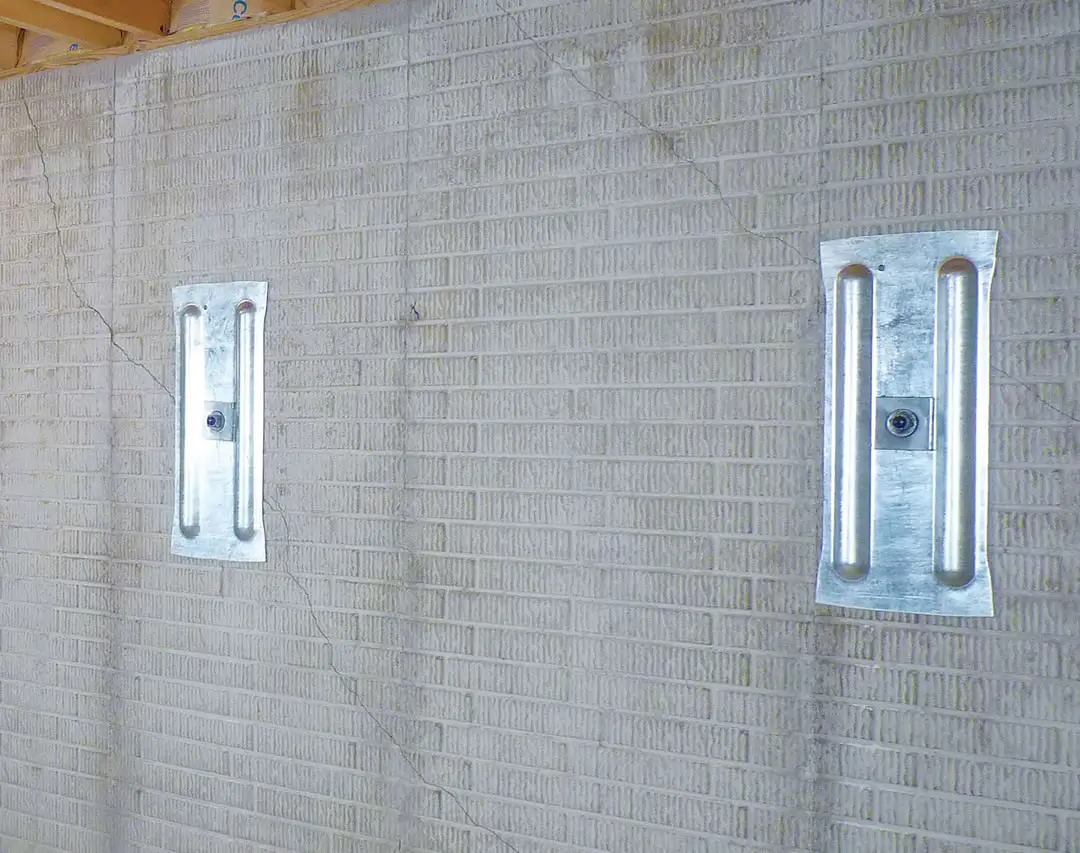
Helical Anchors (also referred to as tiebacks) provide lateral stability to foundation walls and retaining walls with unbalanced earth pressures. Helical anchors can be installed with hand-held equipment, mini-excavators, skid steers, backhoes, track hoes, or crane-supported rigs so the anchors can be installed in almost any application. This versatility, along with the ability to immediately load and test the anchors, make helicals a convenient and economical solution for a wide variety of projects.
Common Signs You Need Helical Tiebacks
Retaining Walls Leaning or Bulging
If your retaining wall is leaning forward or bulging outward, it is usually a sign that soil pressure behind it has increased beyond what the wall can handle. Saturated or unstable soil adds weight and force, pushing against the structure. Over time, that pressure causes movement. What starts as a slight tilt can continue to worsen if not addressed. Ignoring it can lead to structural failure and costly replacement. Stabilizing the wall early helps prevent further shifting.
Cracks at Corners or Along Mortar Joints
Cracks near wall corners or running along mortar joints often signal lateral movement. As soil pushes against the wall, stress builds and the weakest points begin to separate. These cracks may start small but can widen as pressure continues. They are not just cosmetic issues. They indicate that the wall is no longer holding firm against the load behind it. Addressing the underlying pressure is key to stopping the damage.
Previous Repairs That Are Failing
If a wall has already been repaired but is leaning or cracking again, the root problem may not have been corrected. Cosmetic fixes or surface patches do not relieve soil pressure. When the underlying force remains, movement returns. Repeat damage is a sign that the wall needs structural reinforcement. Helical tiebacks anchor the wall into stable soil, which addresses the cause rather than the symptom. A permanent solution prevents ongoing repair cycles.
Slope Movement or Erosion Behind the Wall
Shifting soil or erosion behind a retaining wall reduces the wall’s support and increases uneven pressure. You may notice changes in grade, sinking areas, or soil pulling away from the surface. These conditions allow water and loose soil to build force against the wall. As the ground moves, the wall often follows. Stabilizing both the wall and the soil behind it helps prevent continued displacement. Anchoring into stable ground restores resistance to lateral pressure.
Water Pooling Behind the Retaining Wall
Standing water behind a retaining wall increases the weight and pressure pushing against it. Wet soil is heavier and expands, which places added stress on the structure. Over time, this can cause the wall to bow, crack, or lean outward. Water buildup often points to drainage issues combined with soil pressure. Without reinforcement, the wall may continue to shift. Tiebacks provide the added strength needed to counteract that force.
Where We Use Helical Anchors and Tiebacks
Retaining walls under pressure from saturated or unstable soils
Basement or foundation walls showing signs of outward movement
Sea walls and bulkheads in waterfront properties
New construction projects needing lateral reinforcement
Repair of bowing or failing commercial and residential walls
Seeing these signs? Let’s fix IT.
Commercial Helical Anchors / Tiebacks Process
Evaluation
We begin with a detailed inspection of the wall and the surrounding soil conditions. Our team looks at the degree of movement, the type of wall construction, and signs of pressure buildup. Soil stability and load demands are assessed to determine how deep the anchors must be installed. This evaluation allows us to design a system tailored to the specific structure and site conditions.
01
Pilot Holes and Insertion
Small-diameter holes are drilled either through the wall or directly behind it, depending on the layout of the property. These openings allow for precise placement of the tiebacks without large-scale excavation. The goal is to access the area needed for installation while keeping disruption to a minimum. Careful positioning ensures proper alignment for maximum holding strength.
02
Anchor Installation
Helical anchors are driven into the ground using specialized hydraulic equipment. The steel shafts advance through the soil until they reach stable, load-bearing strata. Each anchor is installed to a calculated depth based on soil resistance and structural requirements. This step creates the foundation for long-term lateral support.
03
Connection & Tensioning
Once the anchors are in place, they are secured to the wall using engineered brackets or wall plates. The system is then tensioned to apply controlled lateral force. This counteracts the soil pressure pushing against the wall. In many cases, the wall can be gradually straightened or stabilized during this stage.
04
Backfill & Restoration
After the system is fully installed and tensioned, all access points are sealed. Soil and surface materials are replaced and compacted as needed. We restore the area to closely match its original appearance. The result is a stabilized wall with minimal visible impact to the surrounding property.
05
Why Choose Cantey for Commercial Helical Anchors / Tiebacks
Certified Structural Anchoring Specialists
Our team is trained and certified in advanced structural anchoring methods, following proven standards to deliver precise installation and long-term wall stabilization.
Commercial and Municipal Experience
We stabilize residential, commercial, and municipal walls, understanding the structural demands and compliance requirements that larger or more complex projects require.
Minimal Disruption to Your Property
Helical tiebacks require only small access points, limiting disturbance to landscaping and surrounding structures while avoiding large-scale excavation in most cases.
Engineered for Your Specific Site
Every system is designed around your wall type, soil conditions, and load requirements to provide reliable lateral support tailored to the structure.
Permanent, Warrantied Solutions
Our anchoring systems are built as long-term structural corrections and backed by a warranty, providing dependable protection against continued wall movement.
Thorough Inspection and Quality Control
We follow a structured process from inspection through final tensioning to ensure accurate installation and consistent wall stabilization results.