Repair Damaged Wood, Joists and Structural Beams
Save your home from structural failure with expert wood repairs designed to fix structural issues and stop rot at the source.
Financing Available
Reinforcing Joists & Structural Beams, & Preventing Rot Damage
Wood Damage Inspection
Structural Wood Repair
Joist and Beam Replacement
Mold Remediation Services
what's Damaging Your Floor Joists & Girders?
If Mother Nature is the cause of your damage, there can be many possible forces hard at work on your crawl space’s structural wood. Determining which one you’re dealing with can be difficult to do!
Sometimes, a wood surface can be virtually covered in mold, but will still show little evident structural damage. In other cases, the wood may appear to be strong and untouched, while subterranean termites have hollowed the wood out from the inside.
Before you can consider a permanent repair for your crawl space, you will need to address the moisture and humidity that feeds mold, rot, pests, and other unwanted forces in your crawl space. The key to this is to keep your crawl space dry by installing a crawl space vapor barrier system and by running a powerful crawl space dehumidifier system.
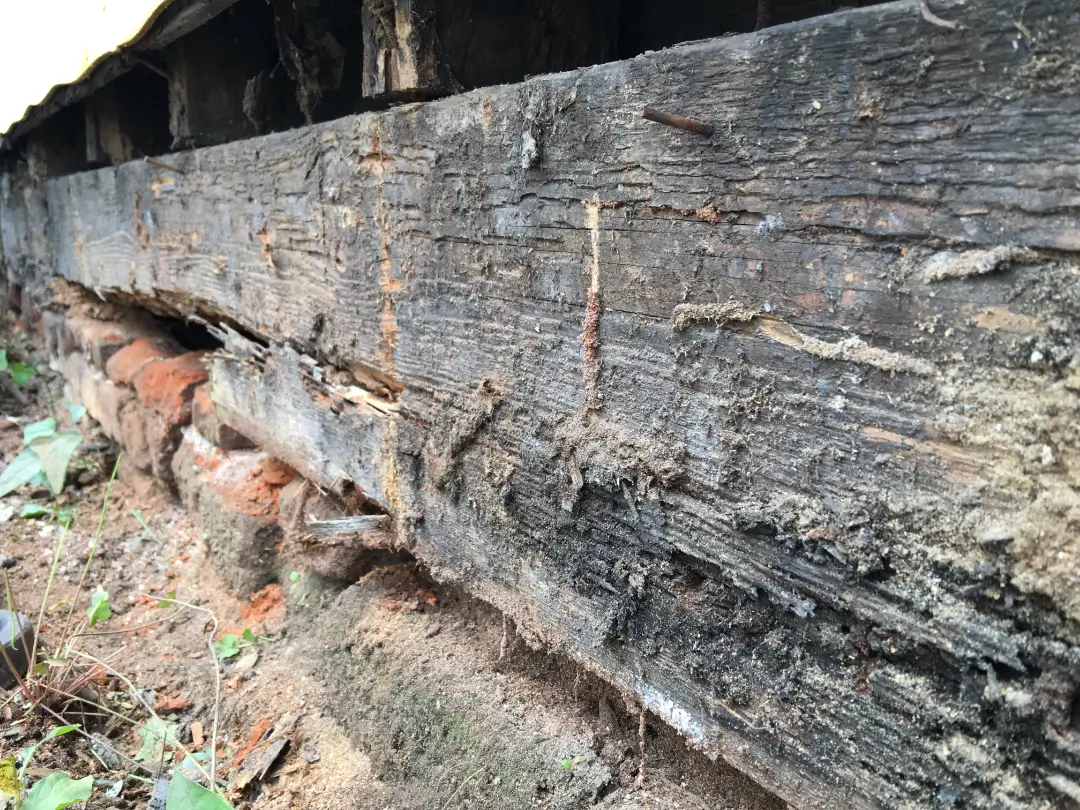

What Causes Wood Damage and Rot?
"Wet" Rot On Floor Joists & Girders
"Wet" Rot On Floor Joists & Girders
Also called “soft rot”, this fungus is known to break wet wood down into cellulose, which will significantly weaken and decompose the material.
When choosing between replacing and reinforcing joists that have been damaged, look carefully at the color of the wood.
Advanced damage will show up as darkening and shrinking of the wood. It will have a soggy, spongy appearance, and will show signs of prolonged moisture exposure.
Often, replacement of this wood will not be necessary. Instead, installing a sister beam and sturdy joist supports may be more than enough to address all present damage, and restore your structure to a stable condition.
Cosmetic, Surface-Level Mold
Cosmetic, Surface-Level Mold
If you see mold that is white and “fuzzy” growing on your wood, there’s a good chance that it’s surface-level mold only.
This type of fungi quickly grows all over wood surfaces in a humid environment, alarming homeowners but not usually amounting to significant damage. These fungi are only able to consume the sugars and starches present in the wood, and not the polymers in wood fibers that provide structural strength.
Appropriate protective gear and an EPA-approved cleaning agent can provide a good short-term solution for cosmetically damaging fungi species (some molds are harmful and/or toxic to inhale or touch).
Given warmth, moisture, and food, mold will always return. Addressing the source of moisture is a much better route to the permanent solution you’re seeking.
Dry/Brown Rot Damage
Dry/Brown Rot Damage
Also known as “brown rot”, this fungus will reduce the wood it feeds on into small, rectangular pieces, leaving a “red dust” of spores behind as it spreads.
While not quite as widespread as other forms of mold damage, dry rot results in severe structural damage to wood. According to a study originally published in the Official Journal of the International Biodeterioration and Biodegradation Society, a 1% decrease of the weight of wood can result in a 75% loss in the wood’s toughness, causing floor joists and girders to begin to crumble apart in a very short period of time.
Don’t be mislead by the name “dry rot” — it does need significant moisture (a minimum of 28-30% content within the wood).
Dry rot damage can be treated with fungicides (such as boric acid) or other mold treatments to eliminate problems. However, the best way to prevent dry rot and related fungi is to create a dry space.
Termite-Damaged Wood
Termite-Damaged Wood
Wood that’s been damaged by termites tends to be hollowed out along the grain and may look completely undamaged. Inside, you can find ragged-looking “galleries” (tunnels in the wood) that are lined with dried mud, waste, and soil.
Other signs mud-lined “tubes” in visible areas around wood, and the sound made by knocking on termite-damaged wood: which produces a hollow sound. Damage in plaster and drywall may appear as tiny, dirt-lined holes.
Each year, roughly 1 in 30 homes are infested by termites. Without annual pest inspections, infestations may continue for 8 years or more — and can mean extensive damage to girders and joists.
As you can imagine, the structural integrity of the wood can quickly become compromised.
Carpenter-Ant-Damaged Wood
Carpenter-Ant-Damaged Wood
Similar to termites, carpenter ants damage wood by hollowing it out from the inside. Unlike their counterparts, however, they do not eat wood — only build their nest inside it. As a result, damage done to wood by carpenter ants is generally far less extensive.
Carpenter ants can be distinguished from termites by their pinched-in abdomen, jointed antennae, and forewings that are longer than their hind wings.
Additionally, carpenter ant tunnels are smooth in appearance, where termite tunnels are rough. Carpenter ants will also leave their nest to forage and to pile “frass” (sawdust, insect parts, and pupil casings) in locations away from the nest.
Both carpenter ants and termites are moisture-loving creates, and are particularly attracted to moldy, rot-damaged wood.
Powderpost Beetle Damage
Powderpost Beetle Damage
The name “powderpost beetle” is a broad term used for several species of wood-destroying beetles that like to infest untreated wood that’s been exposed to humid, damp conditions.
Damage caused by these critters is the cause of more confusion than any other structure-infesting pest — an expert inspection is the best way to identify it.
Powerpost beetle larvae feed on wood cellulose, and will severely damage floor joists, girders, and other structural wood in 1-5 years. The wood they feed upon is reduced to a fine powder, which is deposited in tunnels below the surface of the wood.
Once fully developed, emerging adults will leave tiny, round holes in the wood — about 1/8″ in diameter. They will quickly mate, laying new eggs on or below the wood’s surface.
Common Issues Requiring Wood Repairs
Recognizing the signs of wood damage early is crucial to prevent widespread structural problems and costly repairs.
Sagging or Uneven Floors
Musty or Earthy Odor
Visible Wood Deterioration
Pest Activity
High Humidity in Living Space
Sticking Doors and Windows
Increased Allergy or Respiratory Symptoms
ready to fix it? LET’S GET STARTED
The Best Solution For The Problem
Addressing wood damage effectively requires a dual approach. First, repairing the existing damage and then controlling the moisture that caused it.
Structural Wood Repair & Replacement
- Sistering: Attaching new, strong wood alongside weakened joists or beams to reinforce them.
- Partial or Full Replacement: Removing and replacing damaged sections or entirely replacing severely deteriorated components with new, treated lumber.
- Vapor Barrier (CleanSpace®): Installing a thick, durable, mold-resistant vapor barrier on the crawl space floor and walls to isolate the home from ground moisture and humidity.
- Dehumidifier (SaniDry™): Installing a high-capacity, energy-efficient dehumidifier to actively control and maintain optimal humidity levels in the encapsulated space.
- Vent Sealing: Permanently sealing existing crawl space vents to prevent outside humid air from entering.
- Drainage Systems: Installing interior perimeter drainage (like SmartPipe™) and/or drainage matting to manage any water intrusion and direct it to a sump pump.
Mold Remediation
Repairing Wood Joists & Girders
Comprehensive Inspection & Moisture Assessment
Customized Repair and Moisture Control Plan
Moisture Source Control
Mold Remediation (if present)
Wood Repair & Structural Reinforcement
Crawl Space Encapsulation
Site Cleanup
Why Choose Cantey to Repair Your Wood Damage?

Comprehensive Solutions
We offer a holistic approach that not only repairs existing wood damage but also addresses and eliminates the underlying moisture conditions that cause it, providing a permanent solution and preventing recurrence.
Experienced Specialists
Our team consists of highly trained and certified professionals who are experts in identifying, repairing, and preventing all types of wood damage and crawl space issues.
Permanent Structural Repair
We use durable, proven solutions like the SmartJack® system to restore the structural integrity of your floors and home where wood damage has caused sagging.
High-Quality, Warrantied Products
We utilize industry-leading products from Supportworks and Basement Systems, ensuring reliable, long-lasting results backed by comprehensive warranties.
Improved Home Health & Value
Our solutions significantly improve indoor air quality, reduce allergens, deter pests, and protect your home's structural investment, leading to a healthier and more valuable property.
Eliminates Structural Weakness
Repairs or replaces damaged wood, restoring strength, stability, and safety to your floors and home's entire structure.
Prevents Future Damage
By controlling moisture and humidity through encapsulation, our solutions permanently eliminate the conditions necessary for wood rot, mold, and many insect infestations.
Restores Level Floors
SmartJack® installation corrects sagging floors caused by weakened wood, improving the comfort, safety, and appearance of your living space.
Deterrent to Pests
A dry, sealed crawl space is significantly less attractive to wood-destroying insects like termites and carpenter ants, as well as rodents.
Benefits of Our Wood Damage Solutions
Eliminates Structural Weakness
Prevents Future Damage
Restores Level Floors
Improved Indoor Air Quality
Increased Home Value
Deterrent to Pests
Energy Savings
Our Customers Say it Best
Ask about our financing options
Cantey Foundation Specialists offers flexible, easy to understand financing options for homeowners. During our in-house visit, your specialist will help you find the financing options that work for YOU!
Fixed
12.99% for 120mos
6 Mos
No Payments
12 Mos
With Min Payments
What types of wood damage can you repair?
Can I repair wood damage myself?
How long does wood damage repair take?
Will wood damage come back after repair?
Does wood damage attract other pests?
frequently asked questions about wood repairs
Get a free inspection of your wood damage
Get a clear diagnosis and a permanent solution tailored to your home.