
Stabilizing Failing Or Settling Foundations with Helical Piers in South Carolina, North Carolina, Alabama and Georgia
Permanently restore your home’s stability with our warrantied helical piers, designed to lift sinking foundations and repair structural damage like wall cracks and uneven floors.
Financing Available
The Supportworks warrantied Helical Pier System
Foundation Inspection & Diagnosis
Helical Pier Installation
Settling Home & Porch Solutions
Structural Damage Repair
New Construction Support
what Are Helical Piers?
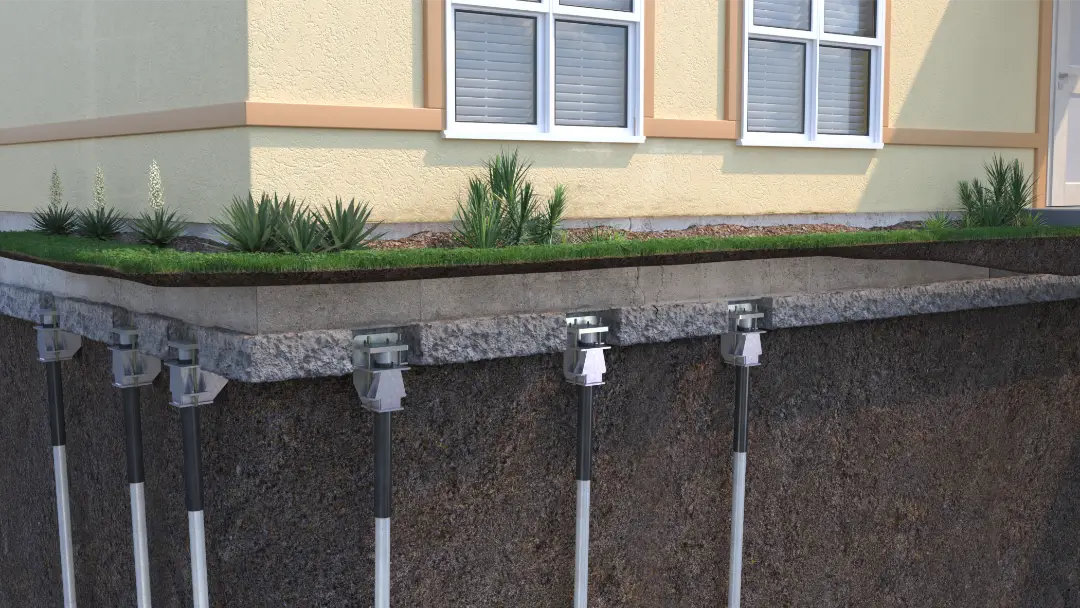
Helical piers, also known as helical piles or screw piles, are a type of deep foundation system used to stabilize and support structures experiencing settlement, or to provide a stable foundation for new construction. They consist of a steel shaft with one or more helical (spiral-shaped) plates welded to it, resembling a giant screw. These piers are mechanically screwed deep into the ground, through unstable soil layers, until they reach stable, load-bearing soil or bedrock. Once installed, a strong steel bracket is attached to the home’s foundation footing, transferring the weight of the structure onto the pier and providing permanent support.
Reasons you need to Use Helical Piers
Expansive Clay Soils
Certain clay-rich soils, common in areas like Camden, SC, expand significantly when wet and shrink when dry. This constant cycle of movement can cause significant stress on a foundation, leading to settlement when the soil shrinks and voids are created.
Poor Soil Compaction
If the soil was not properly compacted during construction, it can settle over time under the weight of the house.
Weak Bearing Soils
Weak Bearing Soils
The original soil beneath the foundation may inherently be too weak or compressible to adequately support the structure’s weight, leading to gradual compression and settlement.
Soil Erosion or Washouts
Water from plumbing leaks, poor drainage, or heavy rainfall can erode the soil beneath the foundation, creating voids and leading to settlement.
Excessive Moisture or Drought
Significant fluctuations in soil moisture content (e.g., prolonged droughts drying out the soil or excessive saturation) can cause changes in soil volume and density, contributing to settlement.
How Helical Pier Systems Work
Helical Design & Bearing
Bypassing Unstable Soil
Torque-Verified Stability
Permanent Load Transfer
Precision Lifting Capabilities
ready to fix it? LET’S GET STARTED
Advantages of Helical Piers
High-Strength Design
Unlike concrete alternatives, our steel piers won’t crack under pressure or add unnecessary weight to already compromised soil, ensuring superior long-term stability.
Corrosion-Resistant Finish
The system is constructed with hot-dipped galvanized steel that will not rust, providing a durable solution that stands up to moisture and soil conditions.
Reinforced Stability
The pier features a round shaft and a specialized external sleeve designed to prevent bending, kinking, or buckling under the weight of your structure.
Versatile Load Capacity
Engineered for adaptability, this system is suitable for stabilizing both heavy home foundations and lighter structures like porches, stoops, or decks.
Minimally Invasive Process
Our installation is fast and requires minimal excavation, allowing us to permanently stabilize your home with little disturbance to your lawn or landscaping.
Invisible Support
Once installed and backfilled, the entire solution remains below-grade and concealed from sight, preserving your home’s curb appeal.
Installing Helical Piers
Site Inspection & Analysis
Our foundation specialists conduct a thorough inspection of your home, assessing the extent of foundation damage and identifying the underlying cause of settlement. This includes evaluating the soil conditions and structural issues.
Customized Repair Plan
A detailed, custom repair plan is designed, outlining the number and placement of helical piers required to stabilize and potentially lift your foundation or support a new structure.
Excavation (for existing structures)
For existing foundations, small, individual excavations are made at strategic points around the exterior or interior of your foundation to expose the footing where the piers will be installed. For new construction, installation typically occurs during the initial grading phase.
Pier Advancement
Using specialized hydraulic equipment, the helical piers are mechanically screwed into the ground. Each pier is driven continuously, one section at a time, until it achieves the predetermined torque and reaches stable, load-bearing soil or bedrock.
Bracket Attachment & Load Transfer (for existing structures)
Once the piers are installed to the appropriate depth, a heavy-duty steel foundation bracket is securely attached to the concrete footing. The weight of the home is then transferred onto the newly installed piers.
Lifting (Optional for existing structures)
If feasible and desired, synchronized hydraulic jacks can be used to gently lift the settled portion of the foundation back towards its original, level position, which can help close cracks and re-level floors.
Backfill & Cleanup
After the load transfer (and lifting, if applicable), the excavated areas are backfilled, and the site is restored, leaving minimal evidence of the repair work.
Why Choose Cantey for Helical Pier Installation?
Versatile Solution
Helical piers are suitable for a wide range of applications, including existing foundations, new construction, lighter structures like porches and chimneys, and areas with challenging soil conditions.
Permanent & Warrantied
Our helical pier installations provide a long-lasting, permanent solution to foundation settlement and come with a comprehensive, transferable warranty, ensuring your long-term peace of mind.
Patented Supportworks Products
We exclusively use high-quality, patented steel helical piers manufactured by Supportworks, a leader in foundation repair technology. These products are engineered for superior strength, durability, and reliable performance.
Minimally Invasive
The installation process typically involves smaller excavations and less vibration compared to other deep foundation methods, leading to less disruption to your landscaping and property.
Skilled & Certified Crews
Our installation teams are highly trained and certified to ensure the precise and efficient installation of the helical pier system.
Immediate Load Bearing
Once installed, helical piers can immediately support the design load, making them efficient for both repair and new construction.
Installs in Tight Access
Can be installed in areas with limited overhead or side access, making them suitable for confined spaces.
Reduces Interior Damage
By stabilizing the foundation, it helps prevent further cracking in drywall, sticking doors/windows, and other aesthetic and functional issues.
Quiet and Low Vibration
The screwing method of installation is quieter and causes less vibration than driven piles, minimizing disruption to occupants and surrounding areas.

Our Customers Say it Best
Ask about our financing options
Cantey Foundation Specialists offers flexible, easy to understand financing options for homeowners. During our in-house visit, your specialist will help you find the financing options that work for YOU!
Fixed
12.99% for 120mos
6 Mos
No Payments
12 Mos
With Min Payments
How do helical piers differ from push piers?
Both are deep foundation systems, but helical piers are screwed into the ground using hydraulic torque, making them suitable for lighter loads, new construction, and where minimal vibration is desired. Push piers are hydraulically driven into the ground using the weight of the structure itself and are typically preferred for heavier existing structures and to achieve maximum lift.
Can helical piers be used for new construction?
Yes, helical piers are an excellent solution for new construction, especially on sites with unstable or questionable soil conditions, providing a strong, deep foundation without extensive excavation.
How long does helical pier installation take?
Helical pier installation is generally quick, often completed in less time than other foundation methods. Many residential projects can be completed within a day or two, depending on the number of piers and site conditions.
Are helical piers noisy to install?
No, helical pier installation is relatively quiet compared to traditional driven piles or concrete pouring. The screwing method produces minimal noise and vibration, making it less disruptive.
Do helical piers have a warranty?
Yes, our helical pier installations come with a robust, transferable warranty, providing long-term assurance of their effectiveness and quality.