
Commercial Helical Piler Installation in Charleston, Charlotte, Columbia & South Carolina
Helical piers are a factory-manufactured steel foundation system consisting of a central shaft with one or more helix-shaped bearing plates, commonly referred to as blades or flights, welded to the lead section.
Financing Available
Micropile, Screw Piles, and Helical Piers in South Carolina, North Carolina, Alabama and Georgia
Inspection and diagnosis of foundation
Installation of Helical Piers
Solutions for Sinking Foundations
Repairs for cracked foundations
Uneven Floor and Door Solutions
Support for new builds in poor soil conditions
what are Helical Piers?
Helical piers, also known as helical piles or screw piles, are a type of deep foundation system used to stabilize and support structures experiencing settlement, or to provide a stable foundation for new construction. They consist of a steel shaft with one or more helical (spiral-shaped) plates welded to it, resembling a giant screw. These piers are mechanically screwed deep into the ground, through unstable soil layers, until they reach stable, load-bearing soil or bedrock. Once installed, a strong steel bracket is attached to the home’s foundation footing, transferring the weight of the structure onto the pier and providing permanent support.
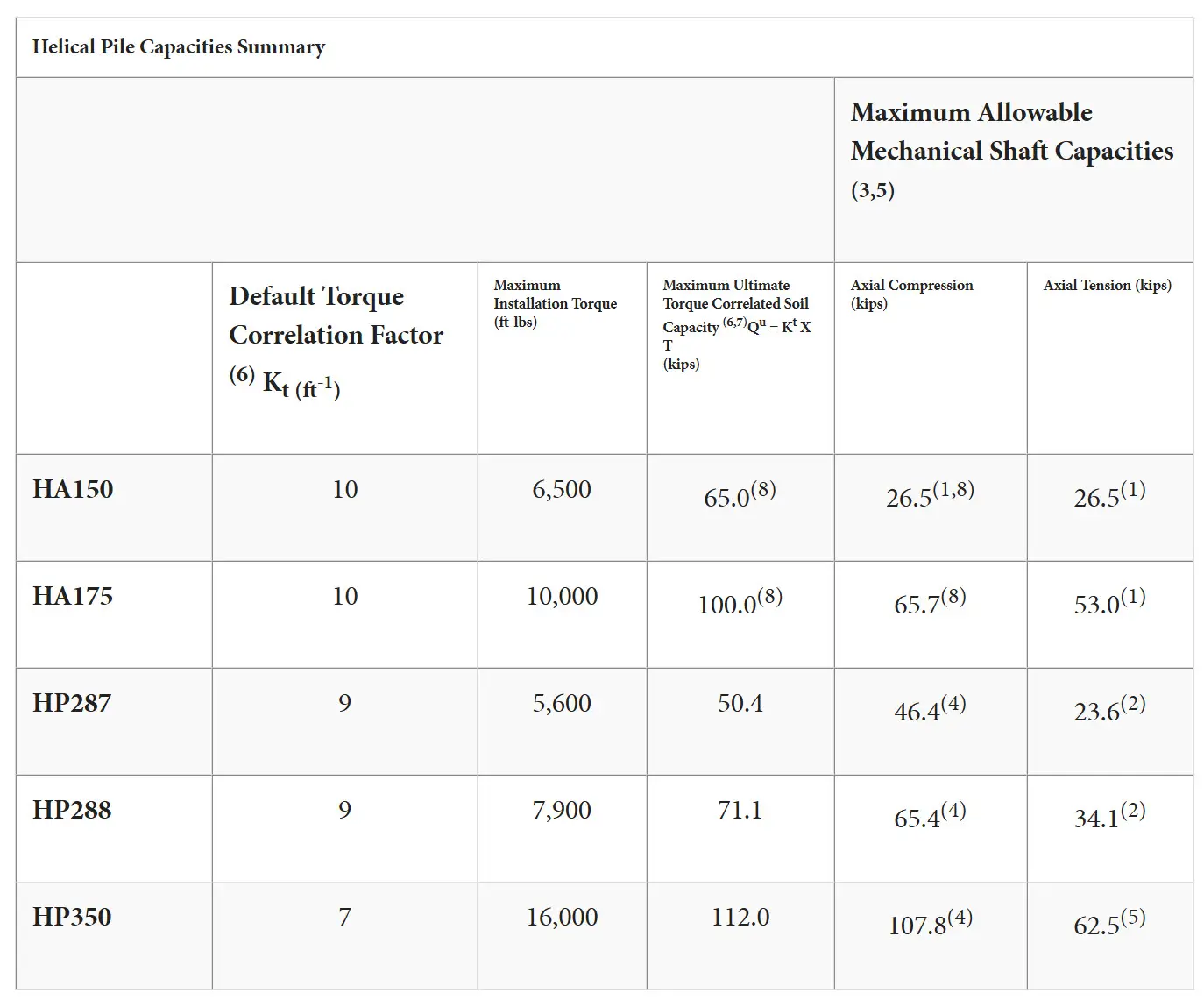
View Our Helical Pile System Product Specifications Document
Supportworks Helical System Specifications
Model 287 Helical Pile System
Bracket: Weldment manufactured from 0.25″, 0.375″, and 0.50″-thick steel plate.
Yield strength = 36 ksi (min.), tensile strength = 58 ksi (min.).
External Sleeve: 3.50″ OD x 0.216″ wall x 30″ long with sleeve collar welded to one end.
Yield strength = 50 ksi (min.), tensile strength = 62 ksi (min.).
Bracket Cap: 5.0″ wide x 9.0″ long x 1″ thick plate with confining ring welded to one side.
Yield strength = 50 ksi (min.), tensile strength = 65 ksi (min.).
All-Thread Rod: 0.75″ diameter x 16″ long, zinc plated. Grade B7, tensile strength = 125 ksi (min.).
Model 288 Helical Pile System
Bracket: Weldment manufactured from 0.25″, 0.375″, and 0.50″-thick steel plate.
Yield strength = 36 ksi (min.), tensile strength = 58 ksi (min.).
External Sleeve: 3.50″ OD x 0.216″ wall x 30″ long with sleeve collar welded to one end.
Yield strength = 50 ksi (min.), tensile strength = 62 ksi (min.).
Bracket Cap: 5.0″ wide x 9.0″ long x 1″ thick plate with confining ring welded to one side.
Yield strength = 50 ksi (min.), tensile strength = 65 ksi (min.).
All-Thread Rod: 0.75″ diameter x 16″ long, zinc plated. Grade B7, tensile strength = 125 ksi (min.).
Model 350 Helical Pile System
Bracket: Weldment manufactured from 0.25″, 0.375″, and 0.50″-thick steel plate.
Yield strength = 36 ksi (min.), tensile strength = 58 ksi (min.).
External Sleeve: 3.50″ OD x 0.216″ wall x 30″ long with sleeve collar welded to one end.
Yield strength = 50 ksi (min.), tensile strength = 62 ksi (min.).
Bracket Cap: 5.0″ wide x 9.0″ long x 1″ thick plate with confining ring welded to one side.
Yield strength = 50 ksi (min.), tensile strength = 65 ksi (min.).
All-Thread Rod: 0.75″ diameter x 16″ long, zinc plated. Grade B7, tensile strength = 125 ksi (min.).
Model 450 Helical Pile System
Bracket: Weldment manufactured from 0.25″, 0.375″, and 0.50″-thick steel plate.
Yield strength = 36 ksi (min.), tensile strength = 58 ksi (min.).
External Sleeve: 3.50″ OD x 0.216″ wall x 30″ long with sleeve collar welded to one end.
Yield strength = 50 ksi (min.), tensile strength = 62 ksi (min.).
Bracket Cap: 5.0″ wide x 9.0″ long x 1″ thick plate with confining ring welded to one side.
Yield strength = 50 ksi (min.), tensile strength = 65 ksi (min.).
All-Thread Rod: 0.75″ diameter x 16″ long, zinc plated. Grade B7, tensile strength = 125 ksi (min.).
ready to fix it? LET'S GET STARTED
Commercial Helical PIER PROCESS
Free Inspection & Assessment
We begin with a detailed on site evaluation of the structure and surrounding soil conditions. Our team identifies signs of settlement, reviews structural loads, and determines where piers are needed to properly support the building. We then develop a custom plan that outlines pier placement, depth targets, and expected stabilization outcomes.
01
Site Preparation
Small excavation areas are created at each pier location to expose the foundation footing. The access points are limited to only what is necessary to complete the installation safely and accurately. This keeps disruption to landscaping, pavement, and surrounding structures to a minimum.
02
Pier Installation
Steel helical piers are hydraulically advanced into the ground by rotating them into the soil. Each pier is driven until it reaches stable, load bearing soil at the required depth. Torque is monitored during installation to confirm the pier achieves the necessary capacity for the structure.
03
Bracket Attachment
Once the piers are installed to proper depth, heavy duty steel brackets are secured to the foundation footing. These brackets connect the structure directly to the piers below. This transfer of load shifts the building’s weight from unstable soil to deeper, more dependable layers.
04
Lift and Stabilization
When conditions allow, a controlled lift may be performed to raise settled portions of the structure. Adjustments are made gradually to reduce stress on the building. The goal is to restore the structure as close as possible to its original position while ensuring long term stability.
05
Backfill and Site Restoration
After the structure is stabilized, excavated areas are carefully backfilled and compacted. The work area is cleaned and restored to blend with the surrounding surface. The result is a stabilized foundation with minimal visible impact to the property.
06
Why Choose Cantey for Commercial Helical Piers?
Versatile Solution
Helical piers are suitable for a wide range of applications, including existing foundations, new construction, lighter structures like porches and chimneys, and areas with challenging soil conditions.
Permanent & Warrantied
Our helical pier installations provide a long-lasting, permanent solution to foundation settlement and come with a comprehensive, transferable warranty, ensuring your long-term peace of mind.
Patented Supportworks Products
We exclusively use high-quality, patented steel helical piers manufactured by Supportworks, a leader in foundation repair technology. These products are engineered for superior strength, durability, and reliable performance.
Minimally Invasive
The installation process typically involves smaller excavations and less vibration compared to other deep foundation methods, leading to less disruption to your landscaping and property.
Skilled & Certified Crews
Our installation teams are highly trained and certified to ensure the precise and efficient installation of the helical pier system.
Immediate Load Bearing
Once installed, helical piers can immediately support the design load, making them efficient for both repair and new construction.

Benefits of Our Helical Pier Solutions
Permanent Foundation Stabilization
Potential for Foundation Lifting
Restores Property Value
Quiet and Low Vibration
Versatile Application
Restores Property Value
Installs in Tight Access
Our Customers Say it Best
What’s the difference between helical and push piers?
Helical piers are screwed into the ground and don’t require the structure’s weight to install, making them ideal for both lighter and full-size buildings. Push piers are driven into the soil using the home’s weight and are best for heavier structures.
Will this stop the foundation from moving again?
Yes. Once installed to load-bearing soil, the piers permanently stabilize the foundation and prevent future settlement.