Is your house foundation sinking or settling?
We stop settlement at the source using Push Piers or Helical Piers. These systems bypass weak soil to anchor your foundation to solid ground, permanently stabilizing your home.
Financing Available
Is your foundation sinking or settling? We provide push piers, underpinning, foundation crack repair-and more!
Professional Foundation Inspection
Settlement Damage Repairs
Identifying Foundation Settlement Issues
Signs of a settling foundation can be very subtle at first, many homeowners can go months or even years before noticing a crack in their foundation. The long-term damage from foundation settlement, however, is ongoing and will lead to more severe foundation problems. As a foundation settles, many telltale signs will become evident. Here are some of the most common ways that foundation settlement can become visible to the homeowner.

Signs To Look Out For!
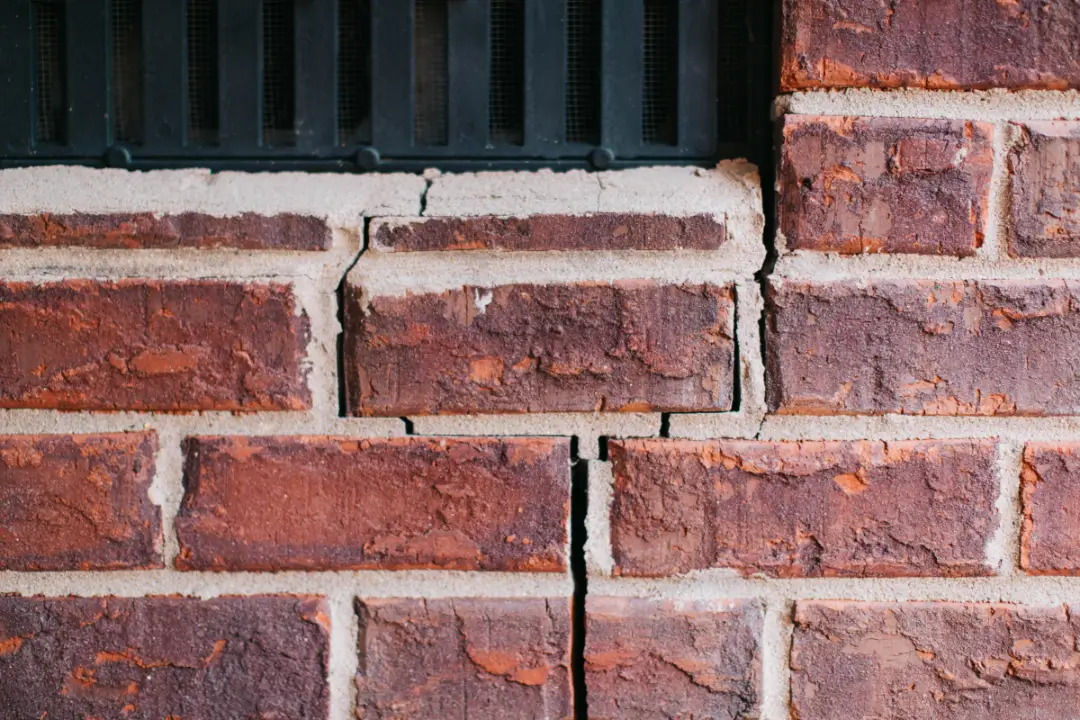
Stair-Step Cracks In Brick Or Concrete
Stair-Step Cracks In Brick Or Concrete
Stair-step cracking is one of the surest signs of foundation settlement and is very common in brick in concrete block walls.
As the settlement continues, vertical cracks may widen or become uneven as wall sections tilt away from each other, indicating more severe displacement.
Keep an eye out for cracks that are wider at the top than at the bottom, as this is a sign of advancing settlement.
Leaning, Tilting Chimneys
Leaning, Tilting Chimneys
Tilting chimneys that are separating from the home are one of the most intimidating and dramatic signs of a settling foundation.
Sometimes a chimney is built on a footing that is not connected to the house foundation. The enormous weight of a chimney can make it even more at risk of settlement.
Cracks Around Doors & Windows
Cracks Around Doors & Windows
An opening cut in any wall is a weak point, so signs of foundation settlement often show up around door and window openings located above settlement areas.
Doors and windows frames may be racked out of square. Cracks may extend from the corners above doors and windows. Doors may separate from the framing or exterior finish. Other signs of foundation settlement include sticking, jamming doors and windows and locks that stop working.
Cracks In A Concrete Slab Floor
Cracks In A Concrete Slab Floor
Cracks in your concrete floor slab can be a sign of foundation settlement, but they may also be a sign that the slab floor alone has settled.
There are times when your slab floor may sink or lift independently of the foundation walls, damaging the floors but not necessarily the foundation walls themselves.
Cracks In Drywall
Cracks In Drywall
Cracks in drywall throughout the house are reliable indicators of foundation settlement. Cracks will often be larger and more obvious in the home’s upper levels.
Typical drywall cracks during foundation settlement are commonly located at the corners of doors and windows and along drywall seams. Drywall tape can also be a good indicator, especially if it’s ripping or coming loose. Drywall cracks can also be a sign of sinking crawl space supports, sinking floors, and heaving floors.
What NOT To Do
Total Foundation Replacement
Concrete Underpinning
Concrete Piers
ready to fix it? LET’S GET STARTED
Repairing Foundation Settlement
We recommend installing foundation piers to stabilize, repair, and restore a foundation that’s been damaged by issues related to foundation settlement and poor supporting soils. We install three different kinds of foundation piers: push piers, helical piers, and slab piers.

Foundation Push Piers
Foundation push piers are straight, steel piers that attach to your foundation and extend far below the structure to strong supporting soils.
During the installation, a section of the foundation footing is exposed and cut to attach to each pier’s bracket. This is possible year-round from either inside or outside of your foundation or structure.
Foundation brackets are secured to the footing, and tubular pier sections are hydraulically driven through each bracket.
Pier sections continue to be driven downwards until the piers meet competent strata that can bear the weight of your home without compression.
When all push piers have been installed, they will work in unison to transfer the weight of the structure to the strong soils or bedrock below. If possible, the home is also lifted back to its original, level position.
Helical Piers
Helical pier systems create a solid supporting base that transfers the weight of your home downwards to strong supporting soils.
The first section of the pier that is advanced into the ground has one or more helical blades (Or “bearing plates”) welded to the shaft.
Additional helical pier sections do not have bearing plates and are instead used to extend the pier to the necessary installation depth.
Helical piers can be installed from either the exterior or interior of your home, providing an opportunity to lift your home back to its original position by the end of the installation time.
Helical piers can also be effective at closing cracks caused by settlement, and can also potentially improve the operation of doors and windows.
Slab Pier Systems
Foundation slab piers are straight steel piers that extend from stable soils deep below the structure to support brackets directly in contact with the underside of the slab.
These piers are meant to support a settling concrete floor and are not appropriate for foundation wall stabilization.
Slab piers are also inappropriate for repairing heaving foundations, where the floor is being lifted by expansive soils or frost heave.
During installation, a small hole is cored through the concrete floor. A slab bracket is assembled beneath the concrete slab, and steel tubes are hydraulically driven down through this bracket assembly.
When the slab piers have reached competent soils, the weight of the slab is transferred through the piers to load-bearing soils below. If possible, the slab is lifted back to level position.
At the end of the installation, our patented Polylevel is pumped under the slab to fill any voids, and all cored holes in the slab are restored with new concrete for a clean, professional look.
Our Process for Repairing a Sinking Foundation
Comprehensive Foundation Inspection
A highly trained Cantey Foundation Specialist will conduct a thorough, on-site inspection. This involves evaluating all visible signs of settlement, identifying the specific type of foundation, and assessing the soil conditions to determine the precise cause and extent of the problem.
Customized Repair Plan
Based on the detailed assessment, we will design a tailored foundation repair plan. This plan will specify the most appropriate pier system (Push Piers or Helical Piers), the number of piers required, and their strategic placement to effectively stabilize and potentially lift your foundation.
Site Preparation
Small, controlled excavations are made around the affected sections of the foundation to expose the footing where the piers will be installed. For interior work, a concrete slab may be carefully cut to access the footing.
Pier Installation
The chosen steel piers (Push Piers or Helical Piers) are then driven or screwed deep into the ground according to the engineered plan, bypassing the problematic soil layers until they reach stable bedrock or competent load-bearing soil.
Load Transfer & Lifting
Once all piers are installed to the required depth and capacity, heavy-duty steel brackets are securely attached to the foundation footing. Synchronized hydraulic jacks are then used to carefully transfer the weight of the home from the unstable soil onto the newly installed piers. If desired and feasible, this process also allows us to lift the settled portion of the foundation back towards its original, level position, which can help close cracks and re-level floors.
Backfill & Site Restoration
After the stabilization and potential lifting, the excavated areas are carefully backfilled, and the site is cleaned and restored to minimize disruption to your landscaping or interior.
Why Choose Cantey for a Sinking Foundation Repair?

Permanent & Proven Solutions
We provide permanent, warrantied solutions using patented Supportworks products like Push Piers and Helical Piers, which are engineered for lasting stability.
Expert Local Knowledge
Our team has extensive experience with the specific soil conditions and common foundation issues in the South Carolina and Georgia regions, ensuring tailored and effective repairs.
Comprehensive Diagnostics
We go beyond surface symptoms to accurately diagnose the root cause of your foundation's settlement, leading to a long-term fix.
Minimally Invasive
Our pier installation methods typically require smaller excavations and less disruption compared to traditional foundation replacement.
Transferable Warranties
Our foundation repair solutions come with robust, transferable warranties, providing peace of mind for you and adding value if you sell your home.
Skilled & Certified Crews
Our installation teams are highly trained and certified in the precise and safe installation of our advanced foundation systems.
Restored Home Value
Addressing foundation issues protects your investment and can significantly increase your property's market value.
Long-Term Foundation Stability
Our pier systems provide reliable, permanent support for your foundation, preventing future settlement regardless of soil changes.
Restored Home Value
Addressing foundation issues protects your investment and can significantly increase your property's market value.
Benefits of Our Sinking Foundation Solutions
Long-Term Foundation Stability
Restored Home Value
Improved Structural Integrity
Potential for Foundation Lifting
Eliminates Unsightly Cracks & Sticking Elements
Peace of Mind
Our Customers Say it Best
Ask about our financing options
Cantey Foundation Specialists offers flexible, easy to understand financing options for homeowners. During our in-house visit, your specialist will help you find the financing options that work for YOU!
Fixed
12.99% for 120mos
6 Mos
No Payments
12 Mos
With Min Payments
What are the main signs of a sinking foundation?
What are the main signs of a sinking foundation?
How quickly can a sinking foundation be repaired?
How quickly can a sinking foundation be repaired?
Are push piers and helical piers the only solutions for settlement?
Are push piers and helical piers the only solutions for settlement?
Can I repair a sinking foundation myself?
Can I repair a sinking foundation myself?
Are your foundation repairs for settlement warrantied?
Are your foundation repairs for settlement warrantied?
frequently asked questions about Sinking Foundations
Get a free inspection of your sinking foundation
Get a clear diagnosis and a permanent solution tailored to your home.